
Tabor, Horace Austin Warner

Horace Austin Warner Tabor “Haw”
born: November 26th, 1830 Holland, Vermont
died: April 10th, 1899 Denver, Colorado
Stonemason, farmer, prospector, postmaster, merchant, politician
born: November 26th, 1830 Holland, Vermont
died: April 10th, 1899 Denver, Colorado
Stonemason, farmer, prospector, postmaster, merchant, politician
Son of Cornelius Dunham Tabor and Sarah Ferrin, Horace had three brothers and one sister. He left home at age 19 to work in stone quarries in Massachusetts and Maine, including being hired, along with his brother John, by his future father-in-law, to work in his quarry in Augusta. In 1855, Horace joined one of the first groups organized by the New England Immigrant Aid Society to populate the Kansas territory with anti-slave settlers. He pre-empted land along Deep Creek, a tributary of the Kansas River, in what is today still called “Tabor Valley,” and began farming. His hard work, and willingness to help the anti-slavery cause also got him elected to serve in the “Free Soil” legislature, which sat in defiance of the so-called legitimate territorial government during an often violent period of civil unrest that came to be called “Bleeding Kansas.”
Early in 1857 he returned to Maine in order to marry Augusta Pierce and bring her back to Kansas. They spent the next two years trying to make the farm productive, but succumbed to the stories of gold being discovered in the extreme western part of the Kansas Territory (now Colorado), finally leaving Deep Creek in the spring of 1859, to walk to Denver via the Republican River trail. They were accompanied by Sam Kellogg and Nathaniel Maxcy, two friends from Maine, the latter of whom had been present at the birth of and gave his name to their son Maxcy, who was by then not even two years old. It took them six weeks of struggle across a barely explored landscape; “the acme of barrenness and desolation,” according to Horace Greeley, who took the same route barely a month after the Tabors.
For the next twenty years the Tabors foraged for riches among the mining camps of the eastern slope of the Continental Divide; at places called Payne’s Bar , Oro City 1, California Gulch, Buckskin Joe and Oro City 2. Typically, Augusta would board, bake for and minister to the miners, while “HAW” tried his luck at placer sluicing or some other means of getting at the precious minerals that lay all around. Mostly, he was Augusta’s partner in keeping store and in running the post office and bank for the various camps; “sturdy merchants,” beloved for their honesty and generosity.
Indeed, in April of 1878, Horace’s generosity hit pay dirt when a casual grubstake of two immigrant prospectors got him a third of the Little Pittsburgh, the first of many “bonanza” mines that Horace would own. After that, HAW Tabor’s star rose quickly, even by Colorado rags-to-riches standards. In barely two years Leadville came two newspapers, a bank and a handsome opera house ALL courtesy of now Mayor, then Lieutenant Governor Tabor.
The Tabors’ good fortune didn’t sit well with Augusta, whose chaste New England sensibilities were short-circuited by their suddenly unlimited wealth. She continued to behave frugally and dress modestly. She still took in boarders. She refused to “paint” her face as other women did. It might be said that the seeds of epic tragedy were sown in Augusta’s too cautious reaction to overnight riches. For, much as she loved Horace, her view of what life should be like when one is middle-aged and fabulously rich diverged irreconcilably from his by the close of the heady 1870s.
Horace’s fame brought him the attention of many; some of whose intentions were honorable, and some not. No matter the motive, Elizabeth McCourt “Baby” Doe came into his life some time in 1880. From then on, their two names would be intertwined, through good times and ill that included an engineered divorce from Augusta, a secret marriage to Baby, a thirty-day “term” in the U.S. Senate, a scandalous wedding in Washington, D.C., the building of the Tabor Grand Opera House in Denver, the birth of two daughters, the stillbirth of a son, the eventual spectacular collapse of his fortune, and a return to hardrock mining at the age of 66. He had talked of accompanying his brother John to the newly discovered goldfields of Alaska when he was appointed Postmaster of Denver in January of 1898. Despite years of exile from the Republican party over the issue of “free silver,” gratitude for Tabor’s early munificence originated with Senator Ed Wolcott who championed Horace’s appointment to President McKinley.
Few mere mortals have experienced the exuberant joys, the painful agonies, the uncountable riches and the unalloyed depths that describe the life of Horace Tabor. Fewer still have done so with the singular mixture of brashness, arrogance, hubris, gaucheness, naivete, stoicism, grace, humility, honesty, tenderness and genuine love that characterized this complex and greatly misunderstood pioneer. Born of frontier New England, refined in a great homestead trek, and annealed amongst the overnight boom towns in the mineral-rich west, his is a true American epic story.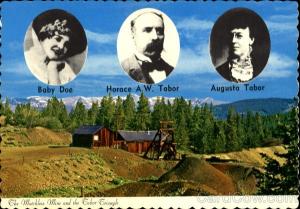

Found this on a GoFundMe page:
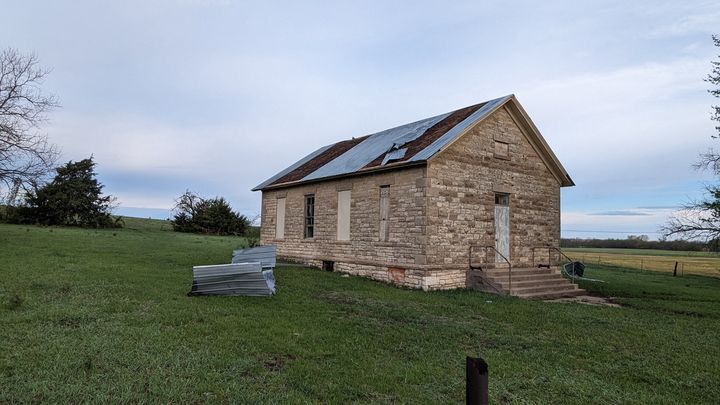
My name is Matt Davis my wife Virginia and I are trying to raise money to start fixing up the old one room Tabor Valley school house. This year the weather hasn’t been kind to her and is tearing the roof off. Insurance has decided not to help her either. We are trying to find a way to keep this building in as good of shape as we can. Hopefully in the future we can restore her and make it a place our little rural community can utilize and enjoy. Currently people love to come take their pictures with her and read about the history of Tabor Valley and it’s connections to the famous Horace and Baby Doe Tabor. Too many of these old schools have been left to rot away. I don’t want to let this one become just another pile of rock and memories. Any funds raised over enough to fix the roof will go towards the restoration of the foundation to make sure she stands strong against Kansas’s crazy weather and stays something that the community can be proud of and look fondly upon for another 140 years.
Tabor, John Holbert “Hob”
Cement Worker and Truck Driver
Born October 19, 1903 Died June 12, 1941 Killed by a drunk driver – survived several days before death.
Born October 19, 1903 Died June 12, 1941 Killed by a drunk driver – survived several days before death.
Husband of Marjorie Grace Daigle Tabor (Married October 11, 1926) in Denver
Father of Miriam Grace Tabor (Gdovin)
Son of Maria Tabor – father’s name unknown (he died before Hob married Gram)
Brother of 8 siblings – Madge Tabor Erway, Pearl Tabor Kunz, Edna Tabor Snapp (married to Frank Snapp – no children) , Iona Tabor Erwin – (married to Dallas Erwin with 3 children – Phyliss, son of unknown name died at 7 months, and unknown third child), Charles Robert Tabor (Uncle Bud) (married Louise Wickes with one child, also, Charles Robert Tabor), 3 unknown, (family home still standing in Denver, on Depew Street)
Nephew of Horace Tabor – Silver Mine King of Leadville, Colorado.
Tabor, Madge
Madge Tabor Erway
Wife of Willard Erway No Children
Sister to John Holbert Tabor
Wife of Willard Erway No Children
Sister to John Holbert Tabor
Tabor, Maria
(pronounced Ma – Ri – Ah) (possibly Wilkerson was her maiden name)
Born circa 1868 in Missouri
Born circa 1868 in Missouri
Died circa 1954 in Denver at 4140 Benton Mountain View
Mother of John Holbert Tabor
Mother of John Holbert Tabor
“Made the best biscuits! She could mix and bake biscuits like nobody’s business!” (quote from Grandma Tabor)
Tabor, Marion
Brother of Horace Tabor – Silver Mine King
Died 1892 in Denver of Brite’s disease
Father of John Holbert Tabor
Occupation: drove a horse driven trolley for Cherry Lynn Trolley
Died 1892 in Denver of Brite’s disease
Father of John Holbert Tabor
Occupation: drove a horse driven trolley for Cherry Lynn Trolley

Tabor, Miriam Grace
Miriam Grace Tabor Gdovin
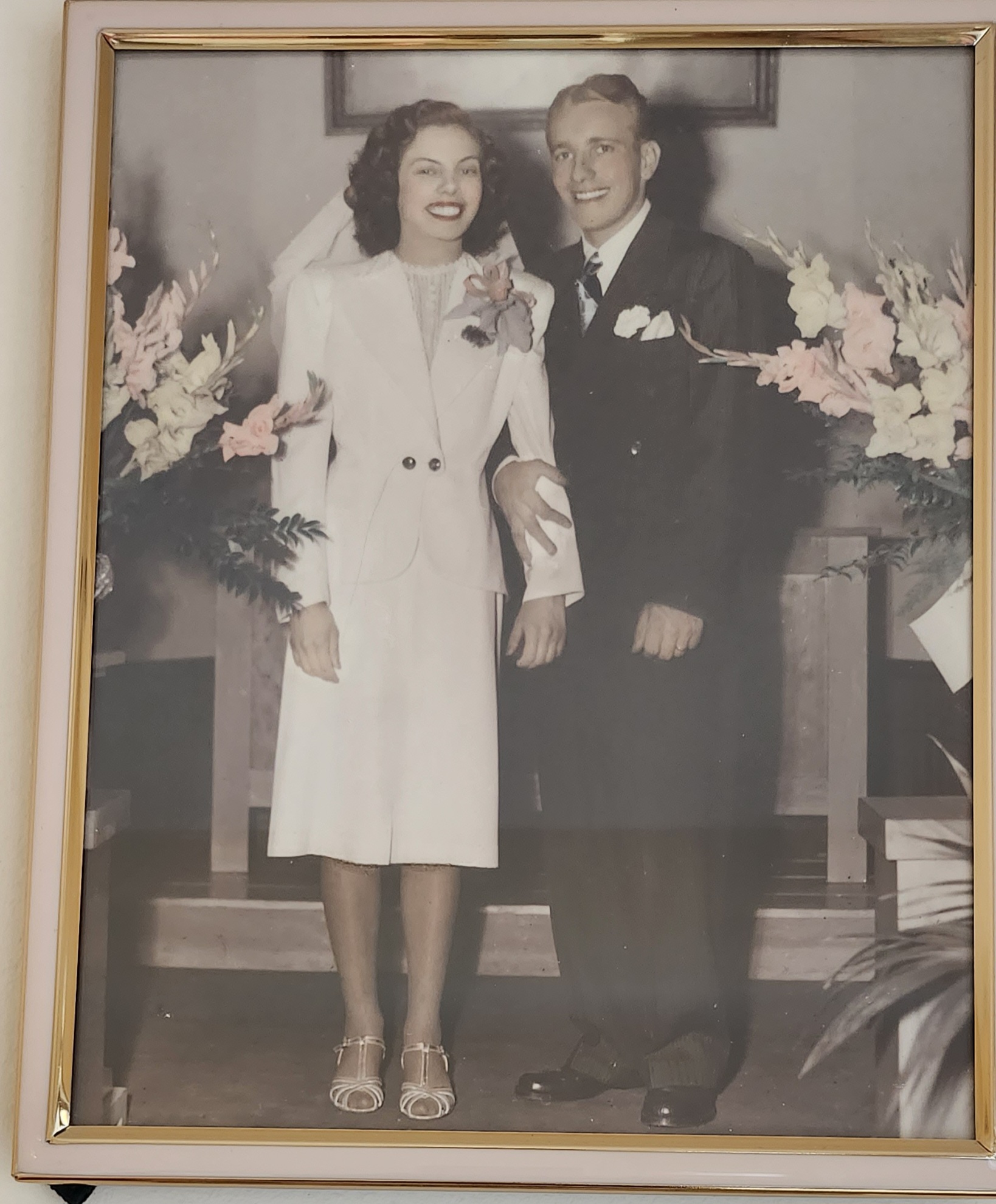
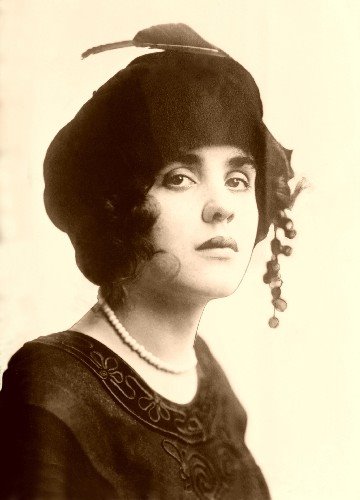
Born 10-08-1927 (home) 4500 Perry Street, Denver, Colorado
Born 10-08-1927 (home) 4500 Perry Street, Denver, Colorado

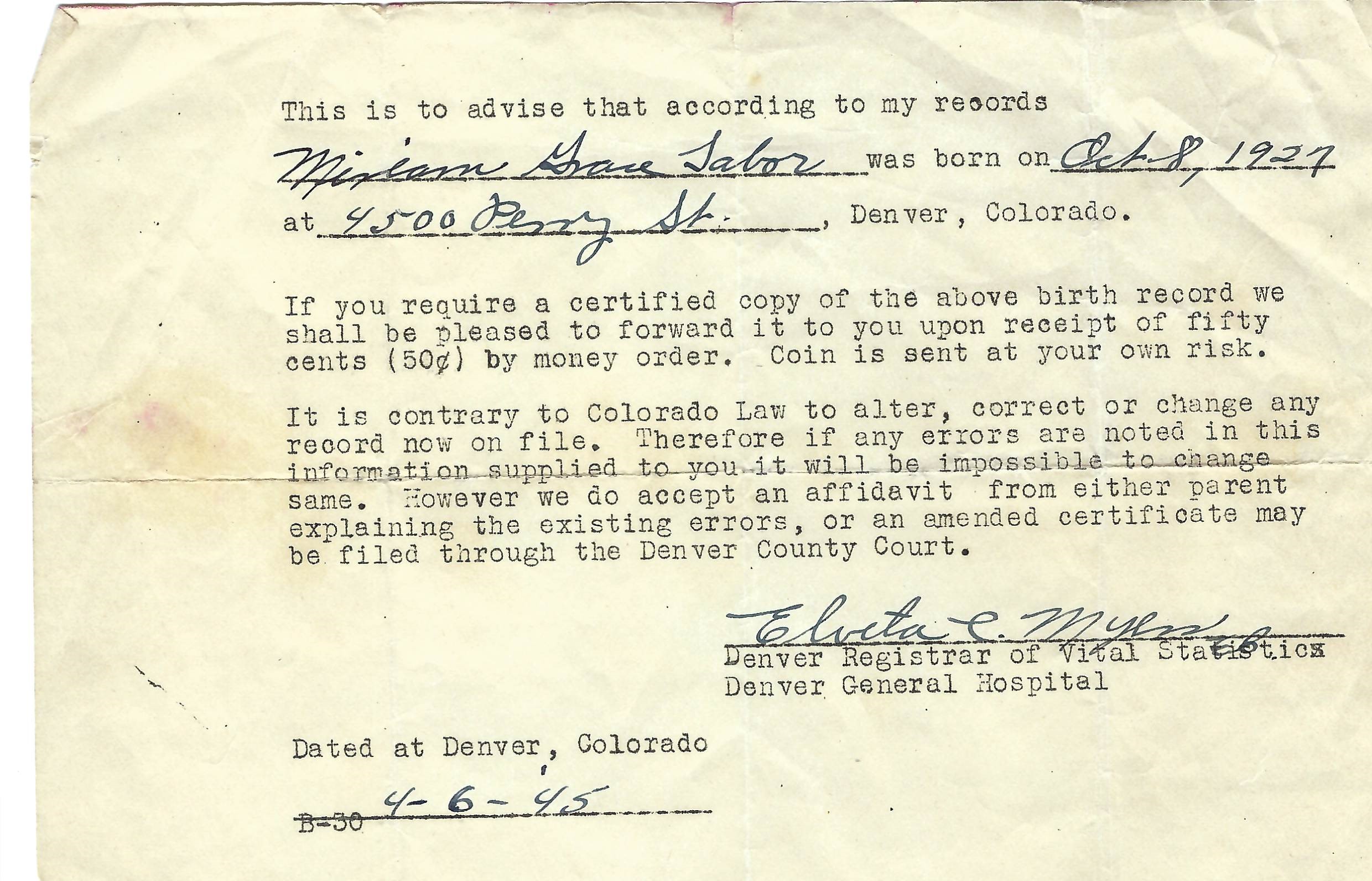
Circa 1942-1945 
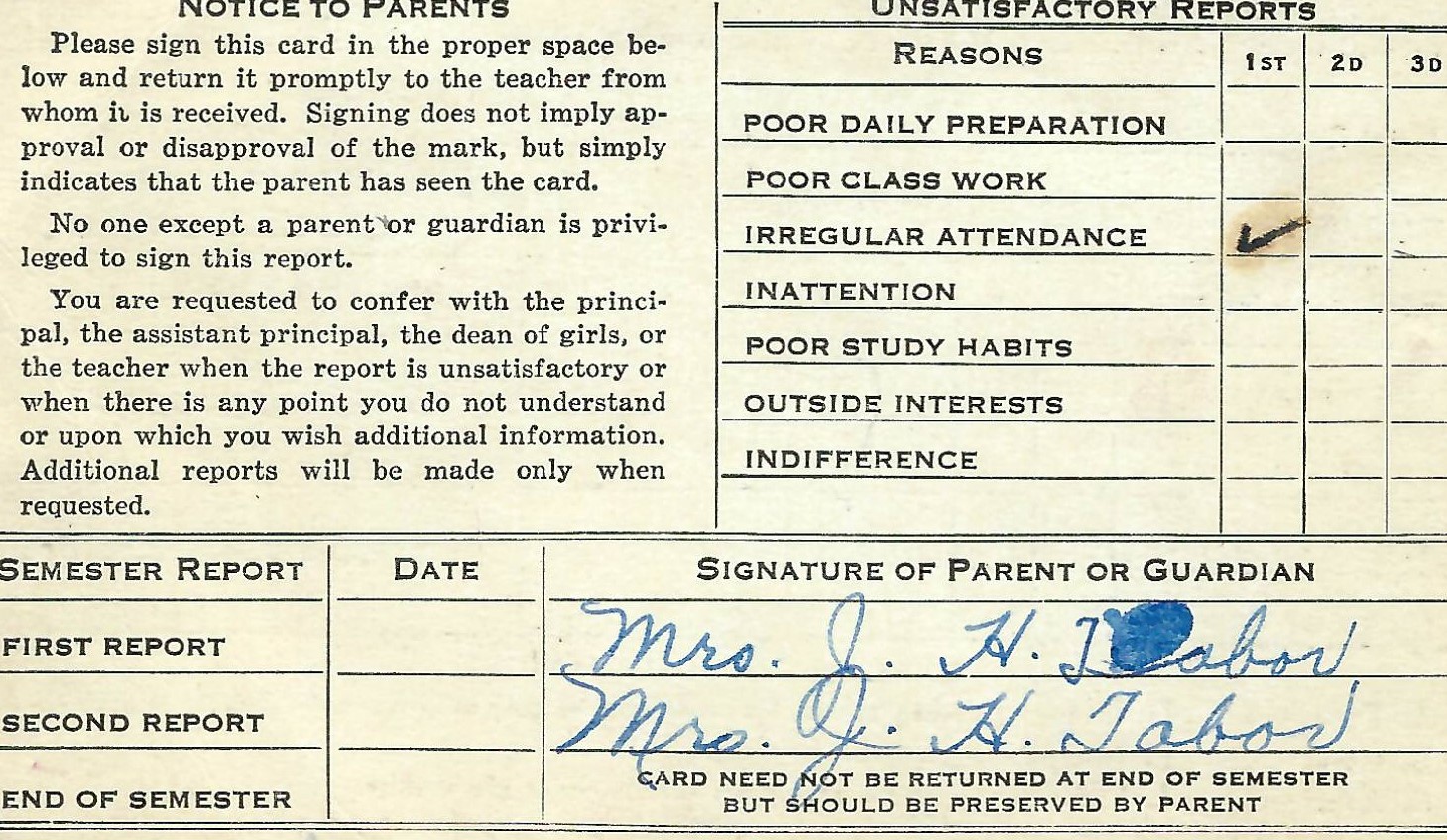

(summer 1947)

 gdovingirl.com
Miriam was my father’s first cousin. He was Hazel’s oldest son.
LikeLike
So, he would be Elaine’s brother. Are you Richard’s son? Would love to have any more info on your family, if you would care to pass it along. My youngest son has done extensive research on our family tree and I am certain he would like to add any additional info you have. You can email me gdovingirl@gmail.com and thanks so much for the info! Happy New Year.
LikeLike
unfortunately I have no information other than vague memories of knowing Mariam and cutting the grass and yard work for Aunt Margie. My grandmother, Hazel, died when I was 3. It has been very interesting reading your blog and informative for me, thank you.
LikeLiked by 1 person